Time Travel: For dummies.
- Mar 10, 2023
- 4 min read

Ah, time travel - the ultimate dream of many a sci-fi fan! But is it possible? How would it work? Let's dive into the science behind time travel and explore the possibilities.
First things first, what is time? Well, time is simply the measurement of change. It's a way for us to understand the movement and progression of events, from the ticking of a clock to the aging of a person. But what if we could manipulate time itself? What if we could go back in time, or even travel to the future?
The concept of time travel has been around for centuries, but it wasn't until Albert Einstein's theory of relativity that the idea gained scientific backing. According to the theory, time is relative and can be influenced by gravity and speed. This means that time can pass at different rates for different objects in the universe.
So, how could we possibly use this theory to travel through time? Well, there are a few different theories and ideas out there, so let's explore some of the most popular ones.
Wormholes - Imagine a worm crawling along a piece of paper. If you fold the paper in half, the worm could travel from one end to the other without crossing the entire distance. This is the basic idea behind a wormhole. In theory, a wormhole could connect two different points in space and time, allowing for travel between them. However, creating a stable wormhole would require an immense amount of energy and is currently only a theoretical possibility.
Time dilation - As mentioned earlier, time can pass at different rates depending on the speed of an object. This means that if we could travel close to the speed of light, time would slow down for us relative to someone on Earth. So, if we traveled at high speeds for a certain period of time and then returned to Earth, we would have effectively time-traveled into the future. However, this method would require incredible amounts of energy and technology that we don't yet possess.
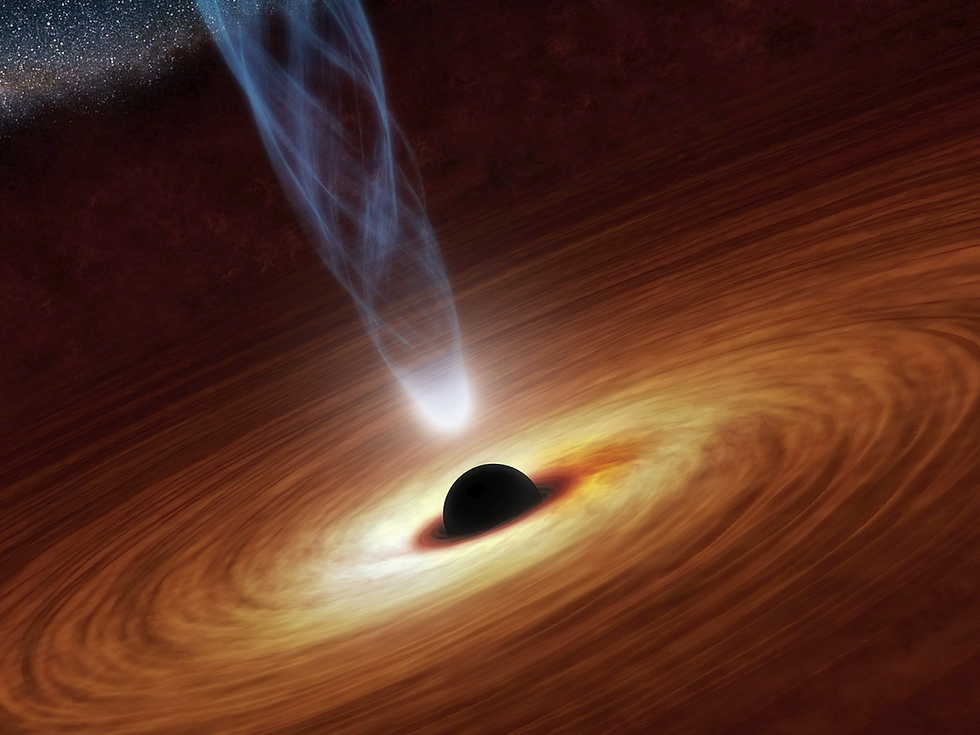
Black holes - Black holes are one of the most mysterious and fascinating objects in the universe. They are incredibly dense and have such strong gravitational fields that not even light can escape. However, some scientists believe that it might be possible to enter a black hole and travel through a "wormhole" to another point in time and space. However, this theory is highly speculative and has yet to be proven.
So, as you can see, the science behind time travel is complex and still largely theoretical. However, scientists continue to explore new ideas and theories, and who knows what breakthroughs the future may hold? But is it really possible tho? First things first: is it easier to travel to the past or the future? Well, according to Einstein's theory of relativity, time is relative and can be affected by factors like gravity and speed. This means that time travel into the future is theoretically possible while traveling to the past remains a more challenging prospect.
The idea of time travel to the past raises several paradoxes, such as the grandfather paradox. If you travel back in time and prevent your grandfather from meeting your grandmother, then you wouldn't exist to travel back in time in the first place. This paradox and others like it have led some scientists to conclude that time travel to the past is impossible, as it would create logical inconsistencies.
However, there are theories that suggest time travel to the past could be possible under certain conditions, such as the idea of multiple universes or "parallel universes." In this theory, traveling back in time would create a new timeline that diverges from the original one, avoiding any paradoxes.
But even if time travels to the past were possible, there are other challenges to consider. For example, the act of traveling back in time could alter the course of history in unpredictable ways, leading to unintended consequences. This idea is explored in the classic Ray Bradbury short story "A Sound of Thunder," where a time traveler accidentally steps on a butterfly, resulting in drastic changes to the future.
Furthermore, even if we could travel through time, a higher understanding of the universe may prevent us from doing so. The concept of entropy, which describes the tendency of systems to become increasingly disordered over time, means that reversing the flow of time would require an immense amount of energy and organization. It's possible that we simply lack the resources and knowledge to overcome this obstacle.
In conclusion, while the idea of time travel is exciting and has captured our imaginations for centuries, the science behind it is complex and full of paradoxes. The possibility of traveling to the future seems more plausible than traveling to the past, but even then, there are many unknowns and challenges to consider. Perhaps the best we can do is enjoy the time we have in the present and leave the rest to our imaginations.
In the meantime, we can still enjoy the many movies, TV shows, and books that explore the idea of time travel. Whether it's traveling back in time to prevent a disaster or venturing into the future to see what lies ahead, the concept of time travel will always capture our imaginations.
So, if you ever find yourself daydreaming about what it would be like to travel through time, just remember - it might not be possible yet, but who knows what the future may hold? Keep dreaming, keep exploring, and keep embracing the wonder and mystery of the universe!


Comments